Monday, 25 January 2016

Feedback

WWW: 
  • Much better in terms of context; More in depth, examples.and theories....
EBI:
  • Almost no focus on the question
  • How many times did you use the word trust?
  • Still need more theories/examples


2) Read through the mark scheme. Of the six different statements, write which you think is currently your strongest and which is weakest. Explain WHY and, for the weakest, what you are going to do to improve in that area.

  • Statics 
  • Good arguments
  • Good points

3) Read through the exemplar A grade essay. What does this essay offer that yours does not? Identify THREE things you can take from this essay to improve your own responses in future.

The exemplar essay has a lot more statistics and quotes in it to make it a better essay whereas mine didn't have any of them. Also, there is a solid use of theories in the whole essay. In addition to this there was also a good and balanced argument in this essay which is something that my essay lacked in.


4) Write ONE new paragraph for your January assessment essay. Ideally, this should be a section you did not cover in your original essay. This paragraph needs to be comprehensive and meet the criteria for Level 4 of the mark scheme.


With developments in new and digital media it has made it very difficult for the consumer to know who to trust, The reason for this is because there are too many different sources, views and values available to us which would make it harder for us to know who is reliable and trustworthy. These developments has made traditional media suffer hugely. This is evident from the following statistic " Over the past few years the newspaper industry has been losing 13.5% of sales per year from 2010 to 2014"

Post-colonialism: blog task


1) Read the excellent article exploring the different representations of black people in British film and TV from Media Magazine 42 (MM42 from our Media Magazine archive - page 51)


2) List FIVE films, FIVE TV programmes and FIVE online-only productions that are discussed in the article.

Films
  • Anuvahod
  • Kidulthood
  • Shank
  • Attack the block
  • Ill Manors

TV Programmes
  • Top boy
  • Citizen Khan
  • Luther
  • The Crouches
  • 55 Degrees north
Online Only
  • All About The McKenzies
  • Meet the Adebanjos
  • Brothers WIth No Game
  • Venus VS Mars
  • The Ryan Sisters

3) Watch Destiny Ekaragha's clips above (more of her work is available onher website, including the short film The Park). To what extent can we apply Alvarado's and Fanon's theories to these films? Do they reinforce or subvert typical black stereotypes in British film and TV? Refer to specific scenes and events in the clips in answering this question and aim for at least 350 words.
Destiny Ekaragha has reinforced the Alvarado and Fanons theory when she was considering the role of her characters. Firstly, in terms of Alvarado's theory which believes that black characters usually fall under the characters of the following;
  • Exotic (models; music artists; food)
  • Dangerous (crime; gangs; socially dysfunctional)
  • Humorous (comedians; sidekicks; quirky)
  • Pitied (poverty)
In this particular case the characters in 'Gone too far' are shown to be humorous. Also, we can see that the one of the characters who is black is shown to be pitied as he is fairly new to the country. In addition, the clothes that they are wearing shows that they are exotic. In addition, in the short film ' Tight Jeans' the main characters are all humorous. 


Also, this can be linked to Frantz Fanons theory which believes the following;

Infantilize - such as the 'cute' children of the Charity Poster or the 'simple-minded‘ 'Step ‘n’ fetch it‘ lazy comedian.

Primitivize - The 'exotic & virile' tribal warriors or 'bare-breasted maidens' with a 'natural sense of rhythm‘. Sporting prowess.

Decivilize - The 'Gangsta', 'Pimp' etc.

Essentialize - Undifferentiated mass-'they all look the same to me'


This can be linked to the second clip 'Tight Jeans' where the boys are seen to be decivilised as they look dangerous such as a 'gangsta or 'pimp' would look like.

Friday, 15 January 2016

Weekly stories


Five things great brands will do differently on social media in 2016

Logo of Twitter and Facebook

  • Last year was great for social but it’s always good to have some perspective. Facebook’s recent $4.5bn (£3.1bn) earnings are hugely impressive but also suggest that overall social investment is still only around 1% of total media spends ($611bn globally).
  • social channels have become walled gardens, offering meaningful mobile reach and relative safety from fraud and adblockers. Ironically there’s never been a better time to invest in them, not because of some new promise of engagement and conversation, but because they’re starting to deliver on traditional media and marketing objectives.

This is a story which talks about what leading social media brands are planning to do for the upcoming year. This is interesting because developments in new and social media are changing rapidly. I think that this is exiting because 2015 was filled with lots of new developments. 


This was the year social networks turned into news organizations

  • Social networks are the overworked writer’s best friend. It’s easy to observe the latest outrage on Twitter, grab a few good jokes from Reddit, or screen cap the ridiculous things people write on Facebook and turn them into blog posts. Writers used to have to find stories to chase — now they just have to be willing to sift through gargantuan masses of shit to find a few nuggets of social media gold.
  • Snapchat’s foray into breaking news took yet a different form. Its staffers gathered content shared to public “Stories” and made them available to anyone near the area affected by the San Bernardino mass shooting of December 2. Small updates about the investigation were written by these same staffers, but for the most part, the company simply shared what its users were experiencing.
This is a story talking about how social media has developed into coming news organisations. Personally i think that this is very convenient for all social media users

Identities and the Media: Reading the riots


How did the language and selection of images in the coverage create a particular representation of young people?
there's a picture where you can see a British youth who is represented to be a villain to society, this is because in the image we can see the youth who is wearing a hooded tracksuit and covering his face, and behind him there is a large fire which looks like it came from a car explosion, from the first look at this image we get a an understanding that they are trying to create a sense of fear for the audience. Next, the title says "Anarchy in the UK" this word means a state of disorder due to absence or non-recognition of authority or other controlling systems. 


Why does David Buckingham mention Owen Jones and his work Chavs: the demonisation of the working class? 

David Buckingham speaks about what Owen Jones mentioned in his book about how the elite control the media and demonise the working class people (marxist theory). 


What is the typical representation of young people – and teenage boys in particular? What did the 2005 IPSOS/MORI survey find?
The typical representations of young people are generally negative, violent and scary. The 2005 survey found that “76% of reporting of young people is negative and only 12% of crime in general is committed by young people” 

How can Stanley Cohen’s work on Moral Panic be linked to the coverage of the riots due to the fact that the London riots caused young people to become violent, aggressive and unpleasant. This caused a moral panic across England as it all happened within a week
What elements of the media and popular culture were blamed for the riots?
There was alot of critism towards the popular culture of Rap/Hip hop/ grime music as many people believed that this was a major factor towards what caused the riots.

How was social media blamed for the riots? What was interesting about the discussion of social media when compared to the Arab Spring in 2011?
Social media was blamed a lot during the London riots (mainly blackberry messenger) as this was used as a form of communication for the rioters to meet up before causing chaos.
The riots generated a huge amount of comment and opinion - both in mainstream and social media. How can the two-step flow theory be linked to the coverage of the riots?
Famous people like Russel Brand and skepta were sharing their thought on the riots through social media and each of them have over 100k followers
Alternatively, how might media scholars like Henry Jenkins view the 'tsunami' of blogs, forums and social media comments? Do you agree that this shows the democratisation of the media?

What were the right-wing responses to the causes of the riots?
the right wings responses was more negative as they were blaming the youths and criticising them a lot and comparing them to animals, whereas the left wing responses were more understanding of the rioters and the reasons they may have participated.

What are your OWN views on the main causes of the riots?
In my opinion, i thought that there was more reasons for people part taking in the riots other than just wanting to cause trouble. These are thing such as unemployment rates, police harassment etc.

How can capitalism be blamed for the riots? What media theory (from our new/digital media unit) can this be linked to?
Were people involved in the riots given a voice in the media to explain their participation?
There was significant cover of the voice of people involved, one in particular was an interview on Sky news with a a young teenager who had his face covered and he was expressing his anger towards society and how he feels he has been marginalised, this was his main cause to participate in the riots.

In the Guardian website's investigation into the causes of the riots, they did interview rioters themselves. Read this Guardian article from their Reading the Riots academic research project - what causes are outlined by those involved in the disturbances? 


What is your own opinion on the riots? Do you have sympathy with those involved or do you believe strong prison sentences are the right approach to prevent such events happening in future
In my opinion i thought what happened with the riots were tragic. However, i also think that way which the media portrayed youth was also very unfair. This is because they didn't really cover the wider context enough

Friday, 8 January 2016

Weekly stories(4)


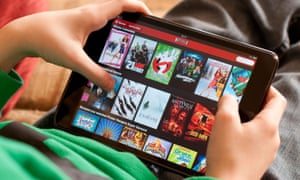
Netflix, Spotify and Apple power UK entertainment revenue to record £6.1bn

Spending on digital TV and films surged 30% to top £1bn for the first time in 2015.
  • UK revenue from music, TV shows, films and video games hit an all-time high of £6.1bn in 2015 thanks to the booming popularity of digital services offered by players including Netflix, Amazon, Spotify and Apple.
  • A surge in digital spending combined with the mega-selling new album by Adele hauled the total UK music market to its first growth in at least a decade, up 3.5% to £1.06bn. The UK music industry saw the number of streams almost double to 27m and physical sales, while flat, were greater than they have been for a decade.

  • The digital boost countered a 15% fall in sales of DVD and Blu-ray on the high street to £1.07bn and a 28% decline in the physical rental market to £76.9m, as the overall video market crept up by 1.5% to £2.24bn.
This is an essay talking about how developments in new and digital media has powered out the entertainment industry, it has now made a record £6.1bn . I think that over the years this will increase to grow more and more. 


Google, Facebook and Twitter among internet giants attacking 'snooper's charter'

Facebook, Google, Microsoft, Twitter and Yahoo criticised plans to force firms to help security services hack into devices as “very dangerous” and called for several changes to the draft legislation


  • Facebook, Google, Microsoft, Twitter and Yahoo criticised plans to force firms to help security services hack into devices as “very dangerous” and called for several changes to the draft legislation.
  • They stated that “as a general rule” users should be informed when the Government seeks access to data. They also criticised “opaque” aspects of the Bill and claimed that allowing warrants on overseas companies to be served on British-based offices “presents a risk to UK employees”.


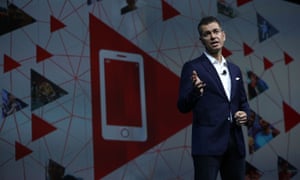
YouTube boss: 'Aim to be the next PewDiePie, not the next Tom Cruise'

YouTube chief business officer Robert Kyncl told CES that YouTube has put an end to the traditional family holiday arguments about what to watch on TV; now everyone sits on their own watching YouTube on their phones

  • YouTube’s PR rep assured me there would be no news at their chief business officer Robert Kyncl’s keynote talk at tech’s largest consumer showcase this week.
  • Internet video has become so important, and Kyncl’s role so influential, conference attendees at the Consumer Electronics Show formed a line through the casino. Four hundred hours of video are shared on YouTube every single minute. More than a billion people watch something on the site every month. And if those stats weren't enough, Kyncl added that 600,000 people cut their cable subscriptions last quarter, a sobering new record for the industry.
this is an article talking about how the CEO of YouTube believes that you should aim to be the next big thing on YouTube rather than becoming an actor. YouTube has become the most popular broadcasting website over the years.


Netflix: from DVD rentals to the verge of world domination

Netflix chief executive Reed Hastings announces its expansion plans at the CES trade show in Las Vegas

  • When Netflix chief executive Reed Hastings took to the stage in Las Vegas on Wednesday to announce the streaming service’s expansion into a further 130 countries, he told the audience they were “witnessing the birth of a global TV network”.
  • It was a grand statement for a company that started out as a US mail-order DVD rental business, but one it has backed by attracting about 74 million subscribers around the world and making huge investments in TV programming.
This is an article which talks about how netflix has dominated the DVD rental industry and how developments in new and digital media has changed over the years.

Friday, 11 December 2015

New and digital media news articles

HuffPo’s new chief on the ‘post social’ mobile era

Jared Grusd


  • Jared Groused on the changing role of Facebook and Snapchat, global expansion and embracing China’s WeChat
  • But does HuffPo make an overall profit? It was bought for $315m by AOL in 2011 and received two separate $1bn offers before AOL itself was bought by Verizon this June for $4.4bn. But AOL does not break out figures and Grusd refuses to confirm reported revenues of $146m last year.
This is an article where Jared Grusd talks about the changing role of Facebook and Snapchat, global expansion and embracing China’s WeChat. 


Political leadership is impossible in the age of social media - as Jeremy Corbyn has found
Jeremy Corbyn

http://www.independent.co.uk/voices/political-leadership-is-impossible-in-the-age-of-social-media-as-jeremy-corbyn-has-found-a6763871.html
  • The way we communicate now threatens the existence of the old political parties. On the one hand, there are the two vast UK governing parties, each supposedly bound together by common values and policies. On the other there is Twitter.
Political leader Jeremy Corbyn said that political leadership is impossible in the age of social media, this is true because of how many views and values we have access to via the internet. In addition, i believe that we will get to a point where election votes will be done the internet.

NDM case study: News on the Tweet

News on the Tweet

News on the Tweet is a report from News works (a marketing organisation representing newspapers) and Twitter designed to show the positive impact new and digital media can have on traditional media.


  • Why are respected news brands good news for Twitter?
Twitter helps newspaper brands to become part of breaking news in people’s minds through instant updates and it is very essential that news is coming from a respected and verified source because on twitter there is a lot of news which is fake or made up which is usually tweeted from an unverified account.

  • Why in turn is Twitter good for respected news brands?
twitter is good for respected news brands because it allows them to branch out to a wider audience, this is a great example of globalisation. It also allows audiences to gain access to greater views and values as they would have a large variety of news sources to read from
  • On page 24/25 of the report, the focus turns to 'gossip' or 'banter'. What example tweets from journalists are used to illustrate this? 
The gossip and banter section on news is usually based around celebrities, sports and political scandals and the main purpose of this section is to provide entertainment to followers. they usually tweet to create a sense of humour or 'Backstage access' into the lives of people. Some example of tweets made by journalist are the following; 

@caitlinmoran "The most amazing thing about the story of President Hollande having an affair is that he apparently only has one pair of shoes."
@DailyMailCeleb  "Do these pants make Kim Kardashian’s bum look big? http://dailym.ai/1aS7Sfy pic.twitter. com/QEdkYMxdkD"

  • Do you think the increasing amount of 'gossip' or 'banter' is harming the reputation of news and journalists?
I don't believe that this harming the reputation of news and journalist because this is not main news, for example, daily mail have their own section (DailymailCeleb) where there is news all about celebrities, so therefore followers are able to choose what news they want to consume.
  • What does the report say about trust in Twitter and journalists (look at pages 34-39)?
This report emphasises the fact that news is mainly trusted on twitter if they have a blue tick next to their names (Verified account), almost half of all Twitter users, and almost two thirds of newsbrand users, say it is important that news on Twitter is verified by a respected brand. This helps build trust in the content. “It is important that news on Twitter is verified by a respected brand". 39% of the people asked said that journalists on Twitter are a trustworthy and faster source of news. In addition, newspaper brands provide an authoritive viewpoint and offer verified news in a user generated content. 

Finally, do you think new and digital media developments such as Twitter have had a positive or negative impact on traditional newspapers?

Finally, i believe that new and digital media developments such as twitter have has a negative impact on newspapers, this is because the internet alone has caused such a major decline in the industry and since twitter plays a huge role in the internets new and digital media, this has been one of the main factors which has caused a negative impact on the media.